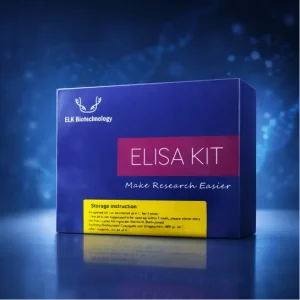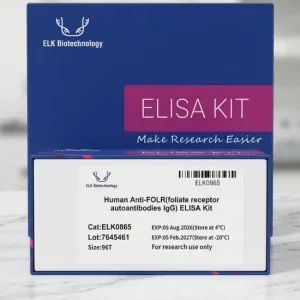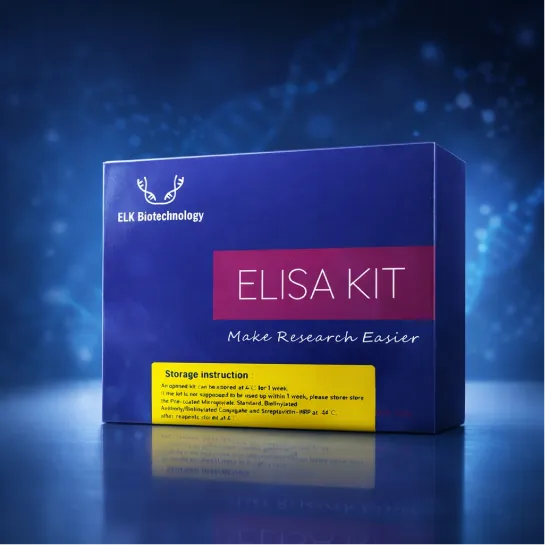
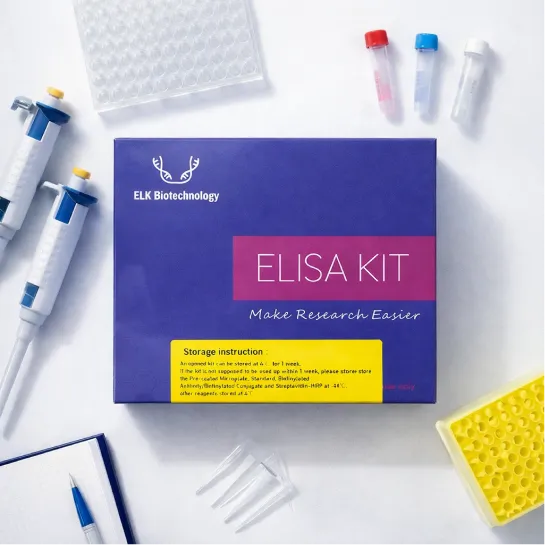
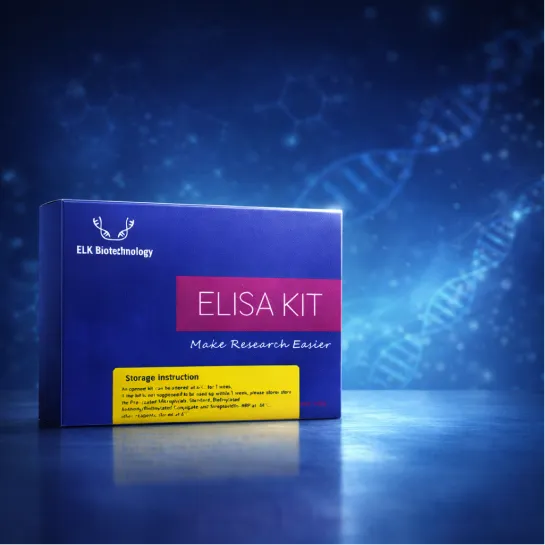
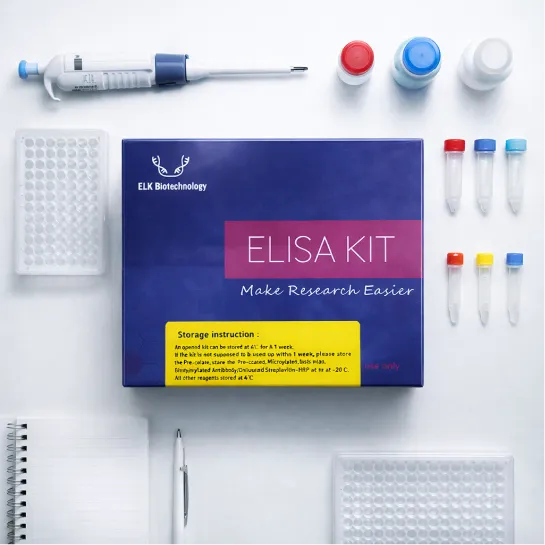
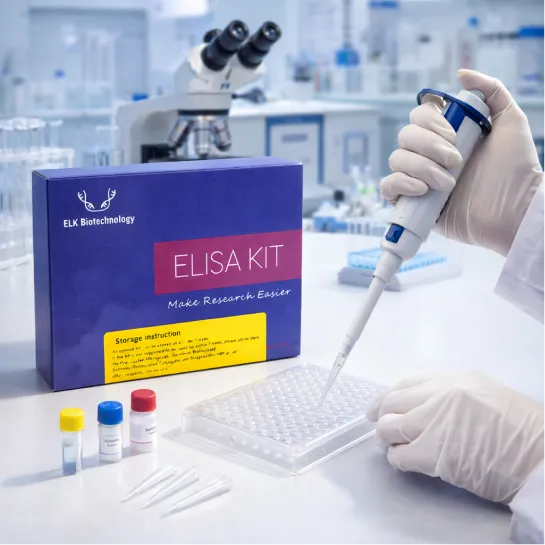
Rat TSH(Thyroid Stimulating Hormone) ELISA Kit ELK2283 96T
₹6,999.00
Key Features
- Assay Type: Sandwich ELISA
- Sensitivity: 0.07 ng/mL
- Detection Range: 0.16 – 10 ng/mL
- Sample Types: Serum, Plasma, and Biological Fluids
- Detection Method: Colorimetric (450 nm)
- Available Formats: 48 Tests / 96 Tests
- High specificity with minimal cross-reactivity
- For Research Use Only (RUO)
Description
Rat TSH (Thyroid Stimulating Hormone) ELISA Kit – ELK2283
The Rat Thyroid Stimulating Hormone (TSH) ELISA Kit (Cat. No. ELK2283) is a highly sensitive enzyme-linked immunosorbent assay designed for the quantitative determination of Rat TSH in biological samples. Thyroid Stimulating Hormone is a key endocrine hormone produced by the pituitary gland and plays a central role in regulating thyroid hormone production and metabolism.
This ELISA kit utilizes a sandwich enzyme immunoassay technique that allows precise and reproducible quantification of TSH concentrations across a broad detection range. The assay is optimized for laboratory research applications studying endocrine signaling, metabolic regulation, and thyroid-related biological pathways in rat models.
Key Features
High Sensitivity Detection
The assay provides excellent analytical sensitivity with a minimum detectable concentration of:
0.07 ng/mL
This high sensitivity allows reliable detection of low levels of Rat TSH in biological samples.
Wide Quantification Range
The kit measures Rat TSH concentrations across the following dynamic range:
0.16 ng/mL – 10 ng/mL
This wide detection range ensures accurate quantification across diverse experimental conditions.
High Specificity
The assay uses highly specific antibodies for Rat TSH and demonstrates minimal cross-reactivity with related hormones or analogues, ensuring reliable analytical results.
Reliable Precision
Performance validation demonstrates strong assay reproducibility:
- Intra-assay precision: CV < 8%
- Inter-assay precision: CV < 10%
These parameters ensure consistent results across experiments and assay runs.
Assay Principle
The Rat TSH ELISA Kit operates based on the sandwich ELISA method:
- Microplate wells are pre-coated with antibodies specific to Rat TSH.
- Standards and samples are added and bind to the immobilized antibodies.
- A biotinylated detection antibody specific to Rat TSH is introduced.
- Streptavidin-HRP conjugate binds to the antibody complex.
- Addition of TMB substrate generates a colorimetric reaction proportional to the amount of TSH present.
- The reaction is stopped and absorbance is measured at 450 nm using a microplate reader.
The concentration of Rat TSH in samples is determined by comparing sample absorbance values with a standard calibration curve.
The workflow diagram on page 6 visually illustrates the sequential antibody binding and enzymatic color development used in this sandwich ELISA detection system.
Compatible Sample Types
The Rat TSH ELISA Kit is validated for detection in multiple biological matrices including:
- Serum
- Plasma (EDTA or Heparin)
- Other Biological Fluids
Proper sample collection, preparation, and storage procedures should be followed to maintain analyte stability and ensure accurate results.
Kit Components
Each kit contains all essential reagents required to perform the assay:
- Pre-Coated ELISA Microplate
- Lyophilized Rat TSH Standard
- Biotinylated Detection Antibody
- Streptavidin-HRP Conjugate
- Standard/Sample Dilution Buffer
- Biotinylated Antibody Diluent
- HRP Diluent
- Wash Buffer (25× Concentrate)
- TMB Substrate Solution
- Stop Reagent
- Plate Covers
All reagents are optimized and quality-controlled to ensure reliable assay performance.
Applications
The Rat TSH ELISA Kit is widely used in research fields including:
- Endocrinology research
- Thyroid hormone regulation studies
- Metabolic and hormonal signaling research
- Pharmacological and drug development studies
- Experimental animal model research involving thyroid function
Storage Conditions
For optimal reagent stability and assay performance:
- Short-term storage: 4°C (up to 6 months)
- Long-term storage: −20°C (up to 1 year)
- Avoid repeated freeze–thaw cycles.
Important Notice
For Research Use Only (RUO).
This kit is intended exclusively for laboratory research applications and not for diagnostic or clinical use in humans or animals.